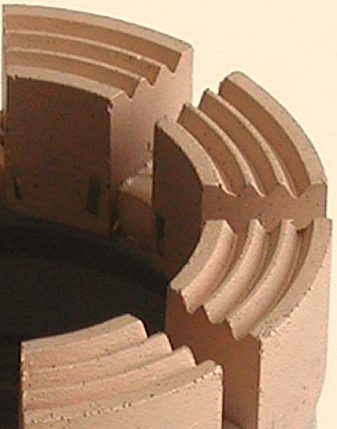
New Condition
Ideal Wear Pattern
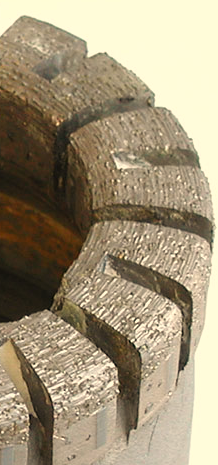
The bit should be relatively flat with slightly chamfered sides. Gauge stays within tolerance and this should be observed at mid-life of the bit.
Normal Retirement
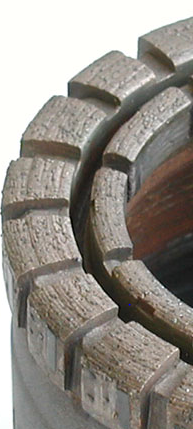
The full depth of diamond impregnation is evenly consumed.
Ideal Wear Pattern
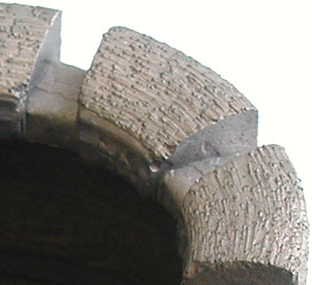
The bit should be relatively flat with slightly chamfered sides. Gauge stays within tolerance and this should be observed at mid-life of the bit.
Concave Face Wear
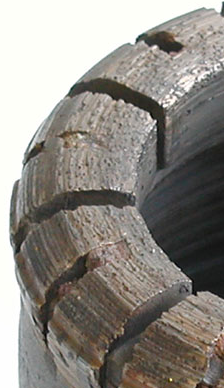
Recommendation:
Reduce penetration rate or revolutions per minute.
Causes:
Rotations Per Inch too low, over drilling or core grinding
Cracked Waterways
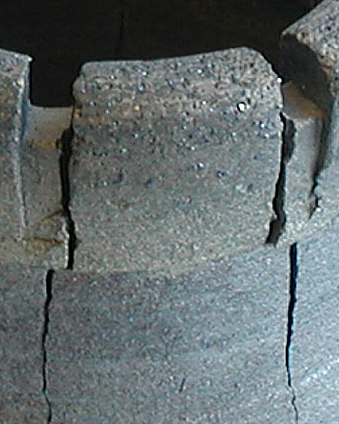
Recommendation:
Replace the bit and review proper drilling procedures
Causes:
Inner tube free fall in a dry hole
Dropped rods
Excessive drill bit load
Bit crushed by rod holder, foot clamp or pipe wrench
I.D Gauge Loss
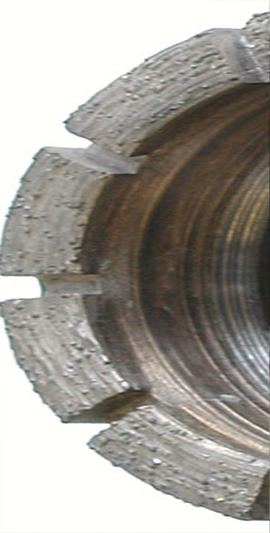
Recommendation:
Examine the core tube contents Reduce penetration rate Check the inner tube length adjustment to ensure that there are no fluid restrictions within the core barrel assembly. Also check the in-hole circulation pump rate and the drill rod string for leaks Cement or change to a lower series bit
Causes:
Overfeeding of the bit
Lack of water/fluids
Broken formations
Drilling over lost core
O.D Gauge Loss
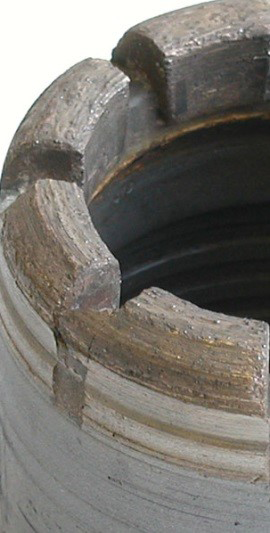
Recommendation:
Check reamer shell gauge
Increase coolant flow rate
Alter RPM
Causes:
Vibration
Lack of circulation
Bit being reamed down under-size hole
Excessive Diamond Exposure
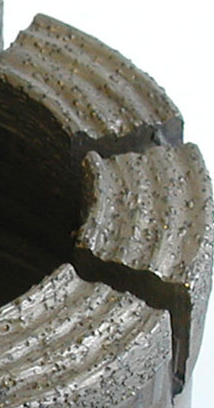
Recommendation:
Change to a lower series bit
Increase RPM
Reduce bit weight
.
Causes:
Overfeeding or over drilling
Burnt Bit
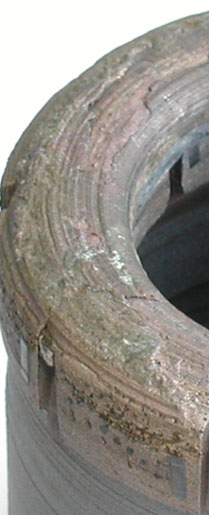
Recommendation:
Reduce weight of drill bit
Maintain coolant flow rates
Check for pump and rod string leaks
Causes:
Significant loss of fluid circulation across the bit face
Excessive weight on bit
Glazed Bit
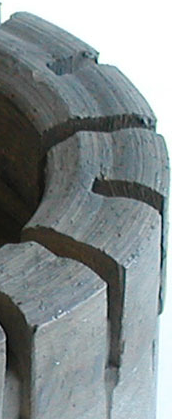
In this condition, the diamond crystals on the bit face have become completely embedded in the metal-bond matrix. Sandblast the bit face in order to re-expose the diamond crystals. Try drilling with a slower rotational speed and/or a lower in-hole fluid circulation rate in an effort to cause the metal-bond matrix to abrade at a higher rate that will cause the diamond crystals to become exposed more readily. If the bit face glazes repeatedly, change to a softer (higher number)